
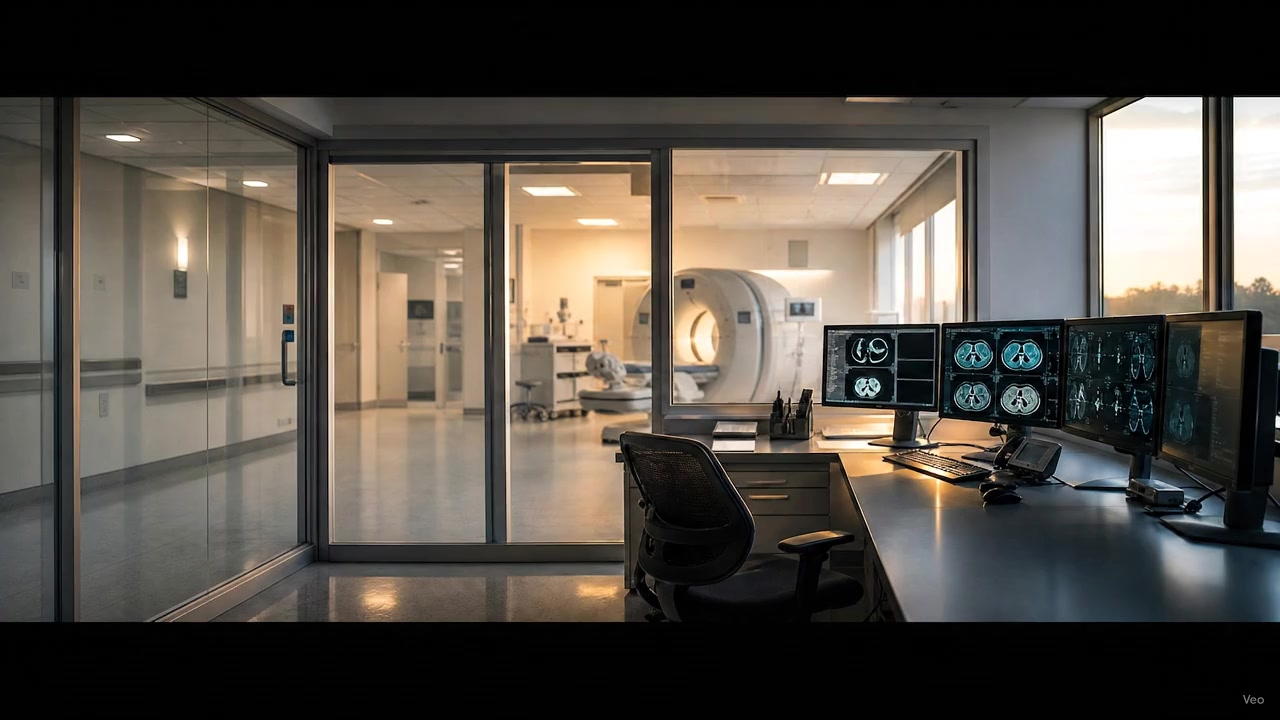
TumorQ / Patient signal
TumorQ / Imaging intake
The scan enters a governed review loop.
TumorQ is designed around PACS-aware intake, authorized imaging access, and patent-pending hybrid-quantum case assembly before any review-support output is treated as meaningful.TumorQ / Evidence gate
Model output must stay challengeable.
Algorithmic segmentation and review-support signals stay tied to source context, uncertainty, confidence, limitations, and intended-use boundaries for qualified professional review.TumorQ / Molecular context
Treatment context cannot be an afterthought.
Imaging findings, pathology, molecular constraints, contraindications, and care-pathway context should move together when diagnosis support becomes a treatment-planning conversation.TumorQ / Provider thread
The care team needs one reviewable packet.
TumorQ frames scan, patient context, evidence language, and plan discussion as a secure collaboration path instead of scattered portals and delayed messages.TumorQ / Private pilot
A precision oncology workflow stays governed.
Private evaluation belongs inside scoped data flows, role-based access, audit posture, retention controls, and regulatory/intended-use review before speed, precision, or accuracy claims are relied on clinically.Precision Oncology Workflow
TumorQ by NEXQ
TumorQ is NEXQ's pilot-governed oncology software layer powered by patent-pending hybrid-quantum algorithms for the moments when time, imaging context, molecular findings, diagnostic evidence, and treatment options cannot stay scattered. It brings scans, symptoms, timeline, pathology, evidence limits, diagnosis-support posture, and care-plan context into one clinician-readable packet, with regulated use reserved for approved configurations and required review.
PATENT-PENDING ALGORITHM LAYER
Hybrid-Q
TumorQ is marketed around NEXQ's patent-pending hybrid-quantum software approach for organizing imaging, molecular, evidence, and treatment-planning context under governed review.
SAME-DAY PACKET TARGET
6h
Private pilots can evaluate whether authorized cases can move from scan to diagnosis-support packet to treatment-planning context inside a same-day target, with any performance claim tied to locked evidence and approved wording.
SCAN ACCESS BRIDGE
PACS
Designed around PACS-oriented intake, export review, and patient-access handoff patterns, subject to institutional governance and approved data flows.
DEPLOYMENT REVIEW
HIPAA / GDPR
Built for privacy and security review before regulated data exchange, with contracts, access rules, retention settings, and local legal review in place.
How it moves
TumorQ by NEXQ keeps the case in one frame.
TumorQ carries oncology imaging, patient context, molecular constraints, and review posture toward a governed treatment-planning conversation.
Scope a private pilotLife context
The product begins with the person, not the scan accession number.
Scan intake
Authorized imaging, symptoms, timeline, pathology, and molecular context enter together.
Hybrid-Q engine
Patent-pending hybrid-quantum workflow logic organizes the case for faster professional review.
Evidence gate
Segmentation and research signals stay paired with confidence, limits, and source context.
Plan context
Treatment-pathway discussion can reference the same review packet under governance.
Patient-owned handoff
The scan, evidence trail, and provider thread remain portable for authorized care teams.
Public materials describe product direction. Regulated reliance requires intended-use review, validation, and authorization.
Why NEXQ now
TumorQ sells the bridge from oncology scan to reviewed plan, not another isolated screen.
TumorQ is marketed around the workflow hospitals are trying to solve now: imaging access, clinician review burden, molecular context, patient communication, and treatment-pathway clarity under governance.
Hospitals
Adopt intelligence without breaking EHR, PACS, compliance, or purchasing reality.
Clinicians
Spend less time hunting for context and more time judging the case.
Patients
Know what is happening, access their scans, and keep their providers aligned.
Why hospitals notice TumorQ
TumorQ is software for the pressure between scan, diagnosis, and treatment.
TumorQ is designed for the operating reality hospitals, clinicians, and patients already feel: scans in one system, context in another, molecular signals elsewhere, and treatment questions waiting for patent-pending hybrid-quantum software to assemble a coherent review packet.
Strength 01
Algorithms designed for scan-to-plan speed
TumorQ centers NEXQ's patent-pending hybrid-quantum algorithms on the high-pressure handoff from imaging signal to diagnosis-support context to treatment-planning review.
Strength 02
Built for the hospital reality
TumorQ is positioned for the reality hospitals face: PACS, EHR context, molecular data, compliance review, purchasing gates, and care-team communication all have to coexist before a pilot can matter.
Strength 03
Clinician trust before automation
Output should arrive with evidence, confidence, limitations, and source context so clinicians can challenge it instead of treating a screen as an answer.
Strength 04
Patient ownership becomes part of the loop
The scan should not be trapped in one portal. TumorQ is designed to support authorized patient access, provider communication, and export-ready handoff patterns so the case can travel with the patient.
Strength 05
Governance stays visible
Role-based access, auditability, retention posture, and intended-use review are visible from the first pilot conversation.
Product shape
TumorQ assembles the case with a patent-pending hybrid-quantum engine.
TumorQ emphasizes PACS-aware intake, patient context, algorithmic case assembly, segmentation-research outputs, molecular constraints, evidence boundaries, and secure handoff patterns that can be evaluated in governed pilots.
Patent-pending review packet
Hybrid-quantum case assembly
Use NEXQ's patent-pending hybrid-quantum software approach to organize approved imaging intake, patient context, molecular signals, and review outputs into a single packet that keeps the clinical question attached.
Privacy and access-control review
Secure provider thread
Bring identity, logging, retention, patient access, and provider communication controls into the same workspace as the imaging review.
Confidence and limits stay attached
Evidence-visible model support
Keep source evidence, confidence, limitations, and care-plan context attached so model-assisted output can be reviewed and challenged by qualified professionals.
Variant-informed context lane
Molecular treatment context
Keep pathology, variants, contraindications, and treatment-pathway discussion close to the scan review so precision oncology conversations can move from diagnostic evidence to treatment-planning context without fragmenting across disconnected tools.
Who it serves
One oncology bridge, three buyer realities.
Hospitals need integration and governance, clinicians need reviewable evidence, and research or biotech teams need reproducible collaboration without turning public pages into unsupported clinical claims.
Scan to review packet
Clinical teams
Evaluate TumorQ for secure imaging review, clinical-context assembly, pilot scoping, and coordinated professional discussions, subject to applicable agreements and regulatory review.
Shared scientific context
Research institutions
Support oncology studies with model-assisted analysis, reproducible workflows, and privacy-aware collaboration.
Molecular context lane
Biotech and pharma
Explore research-stage analytics, stratification hypotheses, variant-informed therapy context, and operational review support under approved research or enterprise governance.
TumorQ workflow
From scan room to diagnosis support to treatment-plan context.
The operating model follows the same choreography as the opening sequence: patient signal, authorized imaging intake, patent-pending hybrid-quantum case assembly, evidence review, molecular context, treatment-pathway discussion, and secure provider handoff.
- 01
Assemble the patient signal: symptoms, timeline, prior imaging, pathology, molecular findings, care goals, and the clinical question.
- 02
Ingest approved research or customer-authorized imaging inputs through governed PACS-aware pathways.
- 03
Apply patent-pending hybrid-quantum workflow logic to organize imaging, molecular, and evidence context for faster professional review.
- 04
Generate review-support outputs with source evidence, confidence, limitations, and uncertainty visible to qualified professionals.
- 05
Connect diagnosis-support context to treatment-pathway discussion only inside approved intended-use, regulatory, and governance boundaries.
- 06
Support patient-owned scan access, provider communication, export review, and audit-ready handoff for authorized care teams.